Design

Monday, April 20, 2015

Essay - Anny Wang - Designer

Essay on Designer - Anny Wang

When Fine Art and Design are blended together, a hooking result is produced, which creates an aesthetic with ambition for the future's innovation in design and art. Anny Wang is a  Spatial and Furniture designer, also a Visual Artist which is interesting how she combines all the categories together. The 25 year old trend seeker works with digital software and metal.  She is from Sweden and based in Copenhagen., holding a Bachelor of Fine Arts in Design which she acquired in 3 years.  Her visual signature instantly puts you in a biography of her own everyday encounters she gets inspired from. Her clients include Nike, Fool's Gold, FRAME, Pitch Zine etc.


Cardia, (2015), Speaking with Anny Wang [ONLINE]. Available at: http://www.kesterblack.com/tag/design[Accessed 20 April 15].


Her odd aesthetics urge you to see furniture in a different way and ask for more of them in the industry. In most times, when you view a piece of her work, a jumbling thought makes you question if they're actually produced in real life of just 3D renderings on the computer, and this is what really caught my attention in all of her works as it requires high level of skill. For Anny Wang, media is just her playground where she can choose from as expression and just create, rather than focusing on a certain one. It is much more important for her to explore different fields rather than producing the commercial portfolio everyone seeks to create. This is something which resembles Andy Warhol's idea of thinking, which is also a huge inspiration for myself. Her ideology in the design is similar to Impressionism, where she gives an impression of reality, but with a rather extremely polished aspect to it. The different colors she inputs in her designs work with the same ideology of Pop Art as they give a different approach to past works with more "funky" looks and feel, like we see below.


Thvnder Magazine, (2014), Untitled [ONLINE]. Available at:http://www.thvndermag.com/thvndergallery/thvndergallery-exposicion-de-anny-wang/ [Accessed 20 April 15].

World Travel Images, (2014), Carlsberg Glyptotek [ONLINE]. Available at:http://www.worldtravelimages.net/Copenhagen_Glyptotek.htm [Accessed 20 April 15].


For Anny Wang, patience is her weakness as she adores the process by analyzing it quickly at the same time, while keeping her ideas freshly cooking while producing, which enhance the product stage by stage. This is similar to what Keith Haring and Jackson Pollock used to work with, although Anny focuses on initial sketching process with priority before the first stages of the final product begin. She takes her time to make the result as perfect as possible, which instantly shows in her works, like we also observe in Romanticism, which resembles the ideology of Anny's works with the exaggerated and almost more than perfect aesthetic, but with objects rather than idealized human figures. The forms produced also create the idea represented in Romanticism, similar to what they used to do with the woman's figure. Another aspect is the use of nature, which is present in Anny's works and Romanticism as it features beautiful aesthetics to every human's eyes.


World Travel Images, (1903), Henrietta Rae - "The Sirens" (1903) [Oil on Canvas 15.06 x 30.3 cm] Victoria Art Gallery, British Columbia [ONLINE]. Available at:http://www.bbc.co.uk/arts/yourpaintings/paintings/the-sirens-40226 [Accessed 20 April 15].

We also inevitably notice the resemblance her work has with High Renaissance period style where perfection was a must in the works, boasting another meaning to reality as we all wish texperience in every aspect. The brightness and softness present in Anny's designs seeks to go back to what these periods had to offer, which gave everyday life a different view to everything around at the time. She is appreciating and trying to revive a part of these important times in the history of Art.
Michelangelo - "David" (1501-1504) [Marble 4.34 x 5.17m] , Accademia Di Belle Arti, Firenze
Pierre Mignard - "Clio" (1689) [Oil on Canvas, 143.5 x 115cm], Museum of Fine Arts, Budapest

Anny Wang , (2014), 3D Illustration for Opening Ceremony [ONLINE]. Available at:http://annywang.se/Opening-Ceremony-3D-set-Illustration-2014 [Accessed 20 April 15].

Her influence from the 80's creates a positive feel to the work with pastel colors and shiny colorful surfaces which she finds mesmerizing how people react to them generally. She delivers this thirst for previous times to resurrect with her branding and advertising commissions with various popular brands and companies.  As you can see, lava lamps are used to bring back the early 60's, as she constantly activates a time machine to the viewer. 

Anny Wang / Photo by Ellika Henrikson, (2014), BA Project - Akin Collection [ONLINE]. Available at:http://annywang.se/Akin-Collection-Furniture-Collection-BA-Project-2014 [Accessed 20 April 15].

The Akin furniture collection shown in the beginning was a school project which embraced craftsmanship that William Morris and John Ruskin echoed throughout 1880 and 1910, as she constructed everything by her hand. I observe the main inspiration coming from Modernism and Art Deco periods which feature exploration to upcoming trends and designs. Art Deco seems to play a  large role, featuring rich colors, bold geometric shapes and minimal yet luxurious approach to the whole imagery. The design is influenced by De Stijl with the use of grids, but in a 3D form.
Unknown, (1920), The De-Cubed Table / De Stijl [ONLINE]. Available at:http://www.trendhunter.com/trends/decubed-table [Accessed 20 April 15].

Anny Wang, (2015), Palm Reader - Hoodboi - Fool's Gold Records EP Cover Artwork [ONLINE]. Available at: http://annywang.se/Palm-Reader-Hoodboi-Fool-s-Gold-Records-EP-Cover-Artwork-2015[Accessed 20 April 15].


A clear example in an album cover design she produced, in which influences from ancient Greek works are present. Starting from the bust boasting beautiful neat surface and the columns that are even broken in a clean intended way, representing how we normally find them in ruins, only giving them respect by turning their damages into a beautiful element to the designs. The palms in the back were commonly used at the time, which gave an elegant look to the temples etc..  
In her works I see resemblance with surrealism as they give reality a different level, as if you are dreaming. The element which really puts me interested in her works is how she manages to perfectly balance contrasting subjects and objects, with perfect composition, just like renaissance works. With her greatly produced 3D renderings, the message she gives in her works creates the perfect result in conjunction with works from History of Art.
The influence she radiates on my work is huge, and this is why I chose her... so as to get to know what this type of aesthetic offers and grow it more on myself. The pure pleasure her work boasts is something which triggers my thoughts which sometimes flourish the way her mind does. 

Bibliography-
Rikke Luna and Matias::. 2015. INTERVIEW | ANNY WANG « I DO ART. [ONLINE] Available at: http://www.idoart.dk/interview-anny-wang/. [Accessed 20 April 2015].

Jill Singer – Sight Unseen. 2015. Anny Wang, Furniture and Interior Designer – Sight Unseen. [ONLINE] Available at: http://www.sightunseen.com/2014/06/anny-wang-furniture-and-interior-designer/. [Accessed 20 April 2015].

Monday, March 2, 2015

Industrial Revolution

Industrial Revolution 
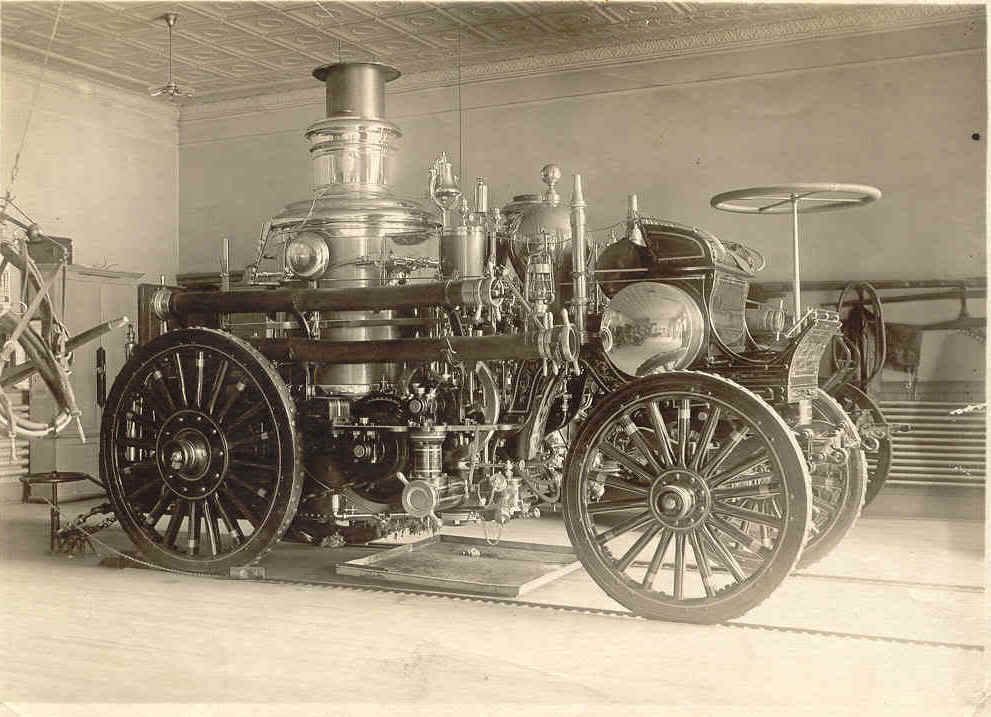
The mother of consumerism, which began in late 18th century, early 20th century. It was a period where rural societies in Europe and America became industrial and urban, which began offering manufacturing, that was often done in people's homes, using hand  tools or basic machinery. The industrial revolution marked a transition from hand tools to powered machinery, factories, and mass production. The birthplace was Britain, and iron and textiles industries, together with the development of the steam engine flourished, playing important roles in the cities which started developing into urban cities.
It was a splendid milestone for people, but also had bad factors which contributed to this. People were sold for slavery, with tragic conditions as to create mass production which was made from coal, thus that was the most crucial material needed to keep the steam engines going.
Kessness, (2014), Steam Engine - Industrial Revolution [ONLINE]. Available at:http://i620.photobucket.com/albums/tt281/kessness/steam_engineIndustrialRevolution.jpg [Accessed 02 March 15].


The steam engine meant unlimited power day and night, where it was first used for coal but later for other uses when mastered. Britain had a large amount of coal and iron ore, that guaranteed a sturdy evolution for this period. The most significant growth was to the textiles industry, when the mills started generating products in a mass amount and without hard conditions in production like previous.
The negative factors included children that refused schools and worked in the mills factories, they also worked for mining, and weren't with good conditions.
 2015. . [ONLINE] Available at:http://www.saburchill.com/history/chapters/IR/images/091107012.jpg. [Accessed 02 March 2015].


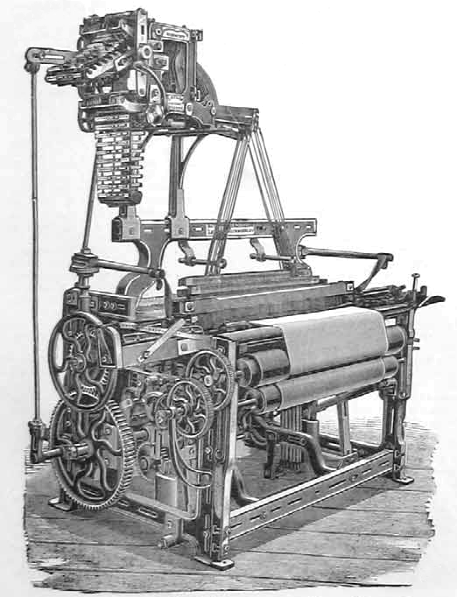
This machine was so important that it replaced workers as it was splendid in production quality. This resulted in Luddite riots who protested against the changes produced by the whole revolution.In 1811, the Luddite movement started spreading though England where they met at night on the rivers surrounding the industrial towns, practicing drills and maneuvers. Many people were object to death threats and attacks by King Ludd and his supporters. The riots ended after the murder of William Horsfall by three Luddities. 

2015. . [ONLINE] Available at:http://upload.wikimedia.org/wikipedia/commons/9/9d/Interior_of_Magnolia_Cotton_Mills_spinning_room._See_the_little_ones_scattered_through_the_mill._All_work._Magnolia..._-_NARA_-_523307.jpg. [Accessed 02 March 2015].


Products made with mills were cheaper to the consumer, thus it demanded more production. In 1813, Francis Cabot Cowell
set up the first american textile factory and combined tasks that were needed to get finished cotton from raw cotton.
A new spinning machine was created by Englishman James Hargreaves that was named "Spinning Jenny", and it enabled up to eight 
threads to be processed at once with multiple spinning wheels.


The weaving cloth was born by English inventor Edmund Cartwright (1743 - 1823), who invented the power loom, that was
developed in the 1780s. Another innovation for the improvement of the looms, was the "Flying Shuttle"  invented by John Kay in 1733. 
This enabled weavers to weave faster by ontaining a bobbin on to which the weft yarn was wound. In 1753, his home was attacked 
by the textile workers, in response to his invention which left them out of work.


We see how much steam engines were of an importance in the period as they were the main drivers of almost every machinery
invented. The first commercial steam engine appeared in 1698, which Thomas Newcomen improved in 1712. Wasted heat and fuel 
were improved by James Watt, by improving Newcomen's engines in 1760s, and achieved in 1785, by using heat more efficiently with less fuel.
The most crucial sources in the revolution were coal and iron, where coal was used to power the steam engines and to make iron. Iron was to 
improve machine and tools, also to build ships and bridges. At the time, most manufacturers were using charcoal to smelt iron, and that is why 
Abraham Darby developed "coke" to do this instead, which was said to be weaker than charcoal they had been using. It was around 1750 when
his son created a process that made coke easier, which was a popular choice by 1760.
When a revolution like this occurs, people's lives get affected, and it was drastic in this time where two classes that benefited were the middle 
and upper ones. They consisted of people that had wealth and success. Even though people afforded products any way, prices were being 
lowered even more, as to give more approach of enjoyment of the new products being made to the ones not affording them.
The larger the revolution became, the more powerful the businessmen and professionals became. Education started elevating, where even rules 
for compulsory schools to kids occured. There was a sudden need for education due to factories that needed workers to build goods.
The working class was not well during the period as many were replaced by machines in factories, but many also gained new jobs with machinery.
Most workers worked with low wages due to their lack of capability in producing products, and that is why schools were important to let these people
learn too, not only the upper class which afforded tutors. People moved from villages to the cities looking for work, so it affected people's lifestyle too.
This revolution couldn't grow without transportation of raw materials and finished products over long distances so 3 main types of transportation that 
increased were waterways, roads and railways. It was crucial because people were living in the West and transportation via water was the cheapest
method to more heavy products. So as to do so, canals were widened and deepened allowing more boats to pass so as to increase production
processes. The first steam-powered steamboat was demonstrated by Robert Fulon in 1807, with its use going from NYC to Albany in Hudson River.


It was able to carry raw materials across Atlantic Ocean by mid 1800s. Roads improved with a high level as people before had to travel  using foot.
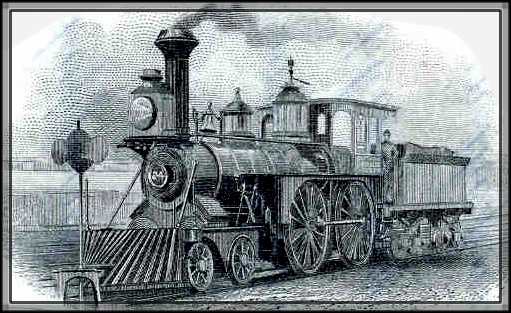
While ships were making an introduction, steam locomotives were also coming into good use where in early 1800s, Richard Trevithick (1771 - 1833)
constructed the first railway steam locomotive. This lead to offer regular passenger services in 1830 by England's Liverpool and Manchester Railway.


In 1709, Abraham Darby developed a method of producing iron in a blast furnace fuelled by coke rather than charcoal. Blast Furnaces allowed iron to be 
produced from a mixture of iron ore, coke and limestone, which made iron widely available.


The seed drill was invented by Jethro Tull in 1701, which was a machine driven by horses and improved ploughing drastically in agricultural world.
This drill would sow seed in uniform rows and over up seed in the rows. Before this invention, sowing seeds was done by scattering seeds on ground.
Tull decided to invent the drill as he thought it was wasteful to sow seeds that way as many seeds didn't take root.


Noticed in the Industrial Revolution is how goods were being produced for products of needs with functionality rather than for entertainment and 
ornament purposes. It was Josiah Wedgwood who started the Wedgwood Company that started producing goods for wants rather than needs.
This consisted of pottery that had the purpose of enjoyment and decorating. He commissioned artists such as John Haxman to create ceramic
designs for his company. He also supplied the Queen with a dinner set as he afterwards was named as her official potter. His works were of high
standard and were hard crafted. 


In the Industrial Revolution we also see the birth of banks as a result of capital, after seeing that companies can profit and result merchants,
retail merchants, farmers, wholesales and others that wanted to invest. The money at the time was given to buy new equipment or improve 
them which expand factories rather then directly investing in the industries and factories.
The first stock exchange was founded in early 1790s and in 1770s being in London and New York respectively.
The 19th Century was an era of innovations and revivals which resulted in what became known as "pictureesque". By mid 19th Century London,
built the world's first underground railways and first photograph. Prior to the revolution, buildings were affected as building materials before were
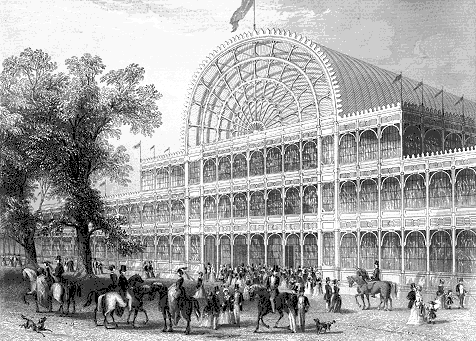
restricted to few man made materials. Due to bulk iron and variety, architecture relied on strength to hold the buildings. The new materials were 
not just used for the skeletons of the building, but also as the facade for example the Crystal Palace and Eiffel Tower. The style complimented 
the modern life that was happening after the revolution.

References:

History Network - HISTORY.com. 2015. Industrial Revolution - Facts & Summary - HISTORY.com. [ONLINE] Available at:http://www.history.com/topics/industrial-revolution. [Accessed 02 March 2015].

Eli Whitney ::. 2015. Industrial Revolution - Textile Industry. [ONLINE] Available at:http://www.industrialrevolutionresearch.com/industrial_revolution_textile_industry.php. [Accessed 02 March 2015].

dev/fort/ ::. 2015. Luddite riots in textiles. [ONLINE] Available at:http://historymesh.com/event/luddite-riots/?story=textiles. [Accessed 02 March 2015].

Mary Bellis ::. 2015. Flying Shuttle - John Kay. [ONLINE] Available at: http://inventors.about.com/library/inventors/blflyingshuttle.htm. [Accessed 02 March 2015].

Eli Whitney :: 2015. Industrial Revolution - Steam Engines. [ONLINE] Available at:http://www.industrialrevolutionresearch.com/industrial_revolution_steam_engine.php. [Accessed 02 March 2015].

Elli Whitney ::  2015. Industrial Revolution - Classes of People. [ONLINE] Available at:http://www.industrialrevolutionresearch.com/industrial_revolution_classes_of_people.php. [Accessed 02 March 2015].

Out of the Box Child :: 2015. How the Industrial Revolution Changed Education. [ONLINE] Available at:http://www.outoftheboxchild.com/industrial_revolution.html. [Accessed 02 March 2015].

Eli Whitney ::. 2015. Industrial Revolution - Transportation. [ONLINE] Available at:http://www.industrialrevolutionresearch.com/industrial_revolution_transportation.php. [Accessed 02 March 2015].

UK Parliament .::  2015. The Industrial Revolution - UK Parliament . [ONLINE] Available at:http://www.parliament.uk/business/publications/parliamentary-archives/archives-highlights/industrial-revolution/. [Accessed 02 March 2015].

About::. 2015. Jethro Tull. [ONLINE] Available at:http://inventors.about.com/library/inventors/bljethrotull.htm. [Accessed 02 March 2015].

Industrial Revolution - Banks. 2015. Industrial Revolution - Banks. [ONLINE] Available at:http://www.industrialrevolutionresearch.com/industrial_revolution_bank.php. [Accessed 02 March 2015].

 Building Design/Architecture - The Industrial Revolution—new Materials - Iron, Steel, Strength, and Cast - JRank Articles . 2015. Building Design/Architecture - The Industrial Revolution—new Materials - Iron, Steel, Strength, and Cast - JRank Articles . [ONLINE] Available at:http://science.jrank.org/pages/1073/Building-Design-Architecture-Industrial-Revolution-new-materials.html. [Accessed 02 March 2015].